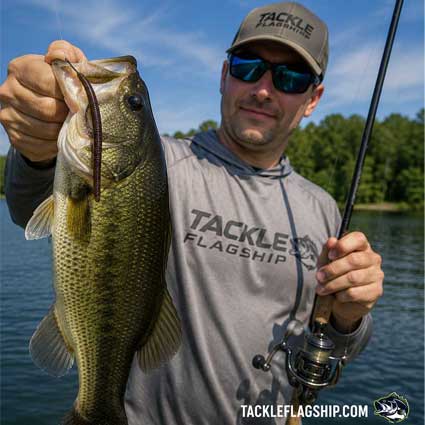
Wacky Rig Fishing for Beginners

Introduction
Few bass fishing rigs are as simple and effective as the Wacky Rig. While many beginners are drawn to spinnerbaits, crankbaits, and other fast-moving lures, experienced anglers often reach for a Wacky Rig when fishing becomes difficult.
The reason is simple. A Wacky Rig creates a subtle and natural presentation that bass find difficult to ignore. Instead of relying on vibration, noise, or speed, it allows a soft plastic stick bait to fall naturally through the water while both ends flutter freely. This action often triggers bites from fish that refuse more aggressive lures.
For beginners, the Wacky Rig offers another major advantage. It is easy to rig, requires very little tackle, and works in ponds, lakes, rivers, and reservoirs. Learning how to fish a Wacky Rig can quickly build confidence and help new anglers catch more bass.
Quick Answer
A Wacky Rig is a soft plastic presentation where a hook is placed through the center of a stick bait. As the lure falls, both ends of the worm flutter naturally, creating an action that bass often find irresistible.
For beginners, start with a 5-inch stick bait, a #1 or 1/0 Wacky hook, and a weightless presentation around docks, weed edges, and shallow cover. Let the lure fall on semi-slack line and watch carefully for subtle bites during the fall.
Key Takeaways
-
The Wacky Rig is one of the easiest soft plastic rigs for beginners to learn.
-
Most bites happen while the stick bait is falling naturally through the water.
-
A 5-inch stick bait is the best all-around lure choice for most beginners.
-
Weightless Wacky Rigs work best around shallow cover, docks, and calm water.
-
O-rings are not required, but they help soft plastics last longer.
-
The Wacky Rig is especially effective when bass are pressured, inactive, or ignoring faster lures.
What Is a Wacky Rig?
A Wacky Rig is a soft plastic fishing rig where the hook is inserted through the middle of a worm rather than at one end. This rigging method allows both ends of the bait to move freely during the fall, creating a natural fluttering action that often triggers bass to strike.
Unlike a Texas Rig, which is designed to move through heavier cover with a more weedless profile, the Wacky Rig is built around subtle movement and slow fall rate. It works especially well when bass are feeding slowly or holding around visible cover.
The Wacky Rig is part of the broader soft plastic fishing system. If you are new to soft plastics in general, start with learning the basics of soft plastic fishing before diving into individual rigs and techniques.
Why the Wacky Rig Works

Many bass anglers are surprised by how effective such a simple rig can be. The secret lies in the fall. Because the hook is positioned in the center of the bait, both ends of the worm move independently as it sinks.
That subtle movement closely resembles an injured or vulnerable prey item. Bass often strike because the bait looks easy to catch, not because it is moving quickly or creating strong vibration. Most bass strikes occur when the lure is descending through the water column. In many cases, the bite happens before the bait ever reaches the bottom, which is why line watching becomes such an important skill when fishing a Wacky Rig.
The Wacky Rig also works well in pressured water. In ponds and lakes where bass regularly see crankbaits, spinnerbaits, and Texas-rigged plastics, the slow fluttering action of a Wacky Rig gives fish a different look.
Another reason it works so well for beginners is that it does not require complicated rod movements. In many situations, simply casting the bait near cover and letting it fall naturally is enough to get bites.
How to Rig a Wacky Rig

Rigging a Wacky Rig is simple, which is one reason beginners learn it so quickly. The goal is to place the hook through the center of the stick bait so both ends can move freely as the lure falls.
Step 1: Choose a Stick Bait
Most anglers start with a 5-inch stick bait because it offers the best balance of size, casting distance, and fish-catching ability. It is large enough to attract quality bass but still easy for smaller fish to eat.
Step 2: Find the Center of the Worm
Locate the middle of the bait. Many stick worms have a slightly thicker center section, which makes hook placement easier. Getting close to the center helps both ends flutter evenly during the fall.
Step 3: Insert the Hook Through the Middle
Push the hook directly through the center of the worm. The hook should sit across the bait rather than running lengthwise through it. This placement is what creates the classic Wacky Rig action.
Step 4: Let It Fall Naturally
After casting, let the bait fall on semi-slack line. Avoid tightening the line too much because that can reduce the natural action. Watch the line closely for any twitch, jump, or sudden slack.
When to Use a Wacky Rig
The Wacky Rig is not always the fastest way to cover water, but it is one of the best choices when bass need a slower, more natural presentation. It performs especially well when fish are present but not aggressively chasing moving lures.
Clear water is one of the best situations for a Wacky Rig. Bass can see the bait clearly, and the natural action often looks more convincing than a loud or aggressive lure.
It also works well around docks, shallow cover, and calm water. These are places where bass often wait for easy prey to fall into their strike zone.
Post-spawn bass are another good target. After spawning, bass can become less aggressive, and a slow-falling stick bait often produces when faster lures fail.
The Wacky Rig is also excellent for pressured fish. If bass have been seeing the same spinnerbaits, crankbaits, and Texas Rigs all day, a subtle Wacky Rig can be different enough to trigger a bite.
Weightless vs Weighted Wacky Rig
| Type | Best Use |
|---|---|
| Weightless Wacky Rig | Shallow water, docks, calm conditions |
| Weighted Wacky Rig | Windy days, deeper water, faster sink rate |
For most beginners, a weightless Wacky Rig is the best place to start. Removing extra weight allows the stick bait to fall slowly and naturally, which is the action that makes this rig so effective. This approach works especially well around docks, weed edges, shoreline cover, and shallow water.
A weighted Wacky Rig becomes useful when fish move deeper or when wind makes it difficult to stay connected to the bait. Adding a nail weight or using a weighted hook helps the bait reach the strike zone faster while still maintaining much of its natural movement.
Neither approach is always better. The best choice depends on water depth, wind, fish activity, and how quickly you need the bait to fall.
Where to Fish a Wacky Rig

Location often plays a bigger role in Wacky Rig success than lure color or brand. Because the presentation is designed to fall slowly and naturally, it performs best around places where bass have time to observe and ambush prey.
Docks are one of the best places to fish a Wacky Rig. Bass frequently position themselves underneath docks for shade, protection, and access to food. Skipping a stick bait under a dock and letting it fall naturally can trigger strikes from fish that ignore faster-moving lures.
Weed edges are another high-percentage target. Bass often patrol the transition between open water and vegetation, using the cover to ambush baitfish. A Wacky Rig can be worked slowly along these edges while maintaining a natural presentation.
Fallen trees, brush piles, and shoreline cover also deserve attention. Rather than dragging the lure long distances, many successful anglers simply cast beside visible cover and allow the bait to fall. In many cases, the bite happens before the lure ever reaches the bottom.
The common theme is cover. Whenever bass have access to shade, structure, or ambush points, a Wacky Rig can become an extremely effective tool.
Best Worms for a Wacky Rig
The stick bait is the lure most anglers associate with Wacky Rig fishing, and for good reason. Its dense body creates a slow, controlled fall while allowing both ends to flutter naturally as it sinks. That subtle movement is responsible for countless bass catches every year.
For beginners, a 5-inch stick bait is usually the best starting point. It casts well on spinning tackle, appeals to both small and large bass, and performs effectively throughout the year. Larger versions can help target bigger fish, while smaller versions often excel during periods of heavy fishing pressure or when bass become selective.
Color selection does not need to be complicated. Green Pumpkin remains one of the most versatile colors because it resembles many natural food sources and performs well in a wide range of water conditions. Watermelon is another excellent option in clear water, while Black and Blue often produces better results in stained or low-visibility conditions.
Many anglers spend too much time searching for the perfect worm, but presentation usually matters more than brand or color. A properly presented stick bait in a natural color will often outperform a premium bait that is fished too quickly or in the wrong location.
Best Hooks for a Wacky Rig
Choosing the right hook can have a significant impact on both lure action and hook-up percentage. Because a Wacky Rig relies heavily on a natural fall, the hook should complement the bait rather than overpower it.
Dedicated Wacky hooks are often the most popular option because they are specifically designed for this presentation. Their shape allows the worm to fall naturally while providing excellent hook penetration when a bass strikes. For most beginners using a 5-inch stick bait, a hook in size #1 or 1/0 offers a good balance between presentation and hook-up performance.
Finesse wide gap hooks are another reliable choice. Many anglers prefer them because they can also be used for other soft plastic techniques, making them a versatile option for anglers who want to carry fewer hook styles. In open water and around light cover, they perform especially well.
When fishing around docks, brush piles, or scattered vegetation, weedless Wacky hooks become increasingly valuable. Small wire guards help reduce snagging while still allowing the hook to penetrate effectively. Although they may slightly reduce hook-up percentages compared with completely exposed hooks, the ability to fish more confidently around cover often outweighs that trade-off.
For most beginners, hook size is more important than hook style. Hooks that are too large can negatively affect the natural fall of the bait, while hooks that are too small may struggle to hold larger fish. Sticking with sizes between #1 and 1/0 will cover most Wacky Rig situations.
Should You Use an O-Ring?
An O-ring is a small rubber ring placed around the middle of a stick bait. Instead of pushing the hook directly through the worm, the hook is inserted under the O-ring. This allows the bait to stay attached more securely during casting and hooksets.
The biggest advantage is durability. Without an O-ring, soft stick baits can tear quickly, especially after repeated casts or multiple fish. An O-ring helps extend bait life and can save money over time.
For occasional anglers, an O-ring is not required. You can absolutely catch fish by placing the hook directly through the worm. But if you plan to fish Wacky Rigs often, O-rings are worth using.
How to Fish a Wacky Rig
The biggest mistake beginners make with a Wacky Rig is doing too much. This rig is designed to work on the fall, so the most important part of the retrieve often happens before you move the rod at all.
After casting, allow the bait to fall on semi-slack line. You want enough slack for the lure to fall naturally, but not so much that you cannot detect a bite. Watch the line closely because many strikes appear as a slight jump, twitch, or sideways movement.
Once the lure reaches the bottom, gently lift the rod tip and let the bait fall again. Small movements are usually better than sharp jerks. The goal is to keep the bait looking natural and easy for bass to eat.
If you do not get a bite after working the bait through the target area, reel in and cast again. A Wacky Rig is often most effective when repeatedly presented to high-percentage targets such as docks, weed edges, and visible cover.
Common Beginner Mistakes
One of the most common mistakes is fishing too quickly. Many beginners become uncomfortable waiting for the lure to fall and immediately begin retrieving it. This removes much of the natural action that makes the rig effective.
Another mistake is setting the hook too aggressively. Because most Wacky Rig hooks are relatively small, a smooth sweeping hookset is often more effective than a powerful upward strike.
Many anglers also use line that is too heavy. Thick line can reduce casting distance and negatively affect lure action. Lighter braided line paired with a fluorocarbon leader usually performs better.
Some beginners also ignore location. A Wacky Rig is effective, but it is not magic. Bass still need a reason to be nearby, which is why docks, weed edges, fallen trees, and other cover are so important.
Finally, many anglers focus too much on color before mastering the fall. A Green Pumpkin stick bait fished slowly in the right place will usually outperform a perfect color fished too quickly or in empty water.
Best Beginner Wacky Rig Setup

Recommended Setup:
-
Rod: 7' Medium Fast Spinning Rod
-
Reel: 2500 Size Spinning Reel
-
Main Line: 10-15 lb Braid
-
Leader: 8-10 lb Fluorocarbon
-
Hook: #1 to 1/0 Wacky Hook
-
Bait: 5-inch Stick Worm
This setup provides excellent casting distance, sensitivity, and ease of use while remaining versatile enough for most Wacky Rig situations. A spinning setup is especially beginner friendly because it handles lighter lures well and makes it easier to cast weightless soft plastics.
FAQ
What size hook for a Wacky Rig?
Most anglers use hooks ranging from #1 to 1/0 for a standard 5-inch stick bait.
What is the best worm for a Wacky Rig?
A 5-inch stick bait is generally the best all-around choice for beginners.
What color worm is best for a Wacky Rig?
Green Pumpkin is the most versatile choice and performs well in a wide range of water conditions. Watermelon is another excellent option in clear water, while Black and Blue can be productive in stained water.
Can you fish a Wacky Rig in deep water?
Yes. Weighted versions can be very effective in deeper water.
Do you need an O-ring for a Wacky Rig?
No, but it helps extend bait life and reduce soft plastic damage.
Is a Wacky Rig good for beginners?
Yes. The Wacky Rig is one of the easiest and most effective soft plastic rigs for beginners.
Wacky Rig vs Texas Rig: Which is better?
A Wacky Rig usually excels around docks, shallow cover, clear water, and pressured bass. A Texas Rig performs better in heavier cover, grass, and situations that require a more weedless presentation.
Related Guides
Final Thoughts
The Wacky Rig proves that bass fishing does not always need to be complicated. While countless lure styles and techniques exist, few presentations match the simplicity and effectiveness of a stick bait hooked through the middle.
If you are completely new to soft plastic fishing, start with a Green Pumpkin stick bait, a weightless Wacky Rig, and a few docks or weed edges. Let the bait fall naturally, watch your line carefully, and resist the urge to overwork it. That simple approach has helped countless anglers catch their first bass and remains one of the most reliable techniques in freshwater fishing.