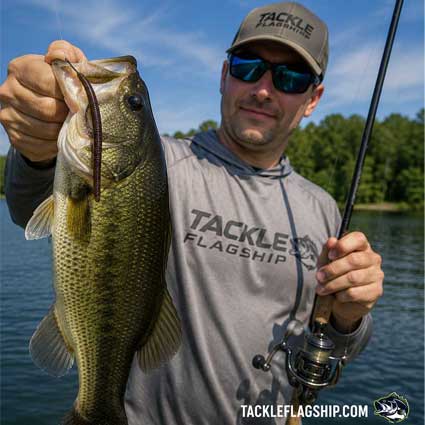
Fishing Hook Types Explained for Beginners: Sizes, Styles & Uses
Introduction
Fishing hooks look deceptively simple. To someone just getting started, they can seem like one of the least important pieces of tackle in an entire setup. After all, if a hook is sharp and strong enough to hold a fish, shouldn't they all work the same way?
Most anglers eventually discover that's not the case.
A hook that performs perfectly when fishing a worm beneath a bobber may be a poor choice for a soft plastic bass lure. A hook designed for catfish can struggle with trout. Even something as simple as fishing around weeds instead of open water can completely change which hook style works best.
The confusing part is that there are dozens of hook designs available today, each built for a slightly different purpose. Walk through any tackle shop and you'll see circle hooks, octopus hooks, treble hooks, EWG hooks, offset hooks, baitholder hooks, and more. To a beginner, many of them look almost identical.
The good news is that you don't need to learn every hook on the market. Most anglers can cover the vast majority of freshwater fishing situations with a handful of common hook styles. Once you understand what each hook is designed to do, choosing the right one becomes much easier.
This guide breaks down the most common fishing hook types, explains how hook sizes work, and helps you choose the right hook for different fish, baits, and fishing conditions.
Quick Answer
Choosing the right fishing hook comes down to three things: the fish you're targeting, the bait you're using, and the conditions you're fishing in.
If you're looking for a quick recommendation before diving into the details, this table will point you in the right direction.
| Fishing Situation | Best Hook Type |
|---|---|
| General Freshwater Fishing | J Hook |
| Live Bait Fishing | Octopus Hook |
| Bass Soft Plastics | EWG Hook |
| Texas Rig Fishing | Offset Hook |
| Catfish Fishing | Circle Hook |
| Hard Lures & Crankbaits | Treble Hook |
| Heavy Cover & Vegetation | Weedless Hook |
Don't worry if hook sizes still seem confusing. We'll break down the entire sizing system with an easy-to-follow fishing hook size chart later in this guide.
Most Common Fishing Hook Types at a Glance
| Hook Type | Why Anglers Use It |
| J Hook | Versatile and easy to use for general freshwater fishing |
| Circle Hook | Helps reduce deep-hooking and supports catch-and-release fishing |
| Octopus Hook | Presents live bait naturally and hooks fish efficiently |
| Baitholder Hook | Keeps worms and natural baits securely in place |
| Treble Hook | Increases hook-up rates on hard lures |
| Offset Hook | Creates weedless soft plastic presentations |
| EWG Hook | Works well with bulky soft plastics and creature baits |
| Weedless Hook | Reduces snags in grass, weeds, and heavy cover |
Fishing Hook Anatomy Explained

Fishing Hook Anatomy Visual Guide
| Hook Part | Function |
| Eye | Connects the hook to your fishing line |
| Shank | Main body of the hook |
| Bend | Gives the hook its overall shape |
| Gap (Gape) | Space between the point and shank |
| Point | Penetrates the fish's mouth |
| Barb | Helps keep fish hooked |
| Offset | Improves bait positioning on certain hooks |
The eye is the small loop at the top of the hook where your line is tied. While it might seem like a minor detail, different eye positions can influence how a bait sits in the water and how a hook turns during a hookset.
Below the eye is the shank, which forms the main body of the hook. Some hooks use a long shank while others keep things compact. Long-shank hooks are often easier to remove from fish and are commonly used with natural baits, while shorter shanks are popular in finesse and soft-plastic applications.
The bend is what gives each hook its unique shape. Circle hooks, octopus hooks, and J hooks all use different bend designs, which is one reason they behave differently when a fish bites.
One of the most important measurements is the gap, sometimes called the gape. This is the space between the hook point and the shank. Wider gaps generally provide more room for bulky baits and can improve hook-up rates when fishing larger soft plastics.
At the end of the hook is the point, which is responsible for penetrating the fish's mouth. Even the best hook design won't perform well if the point becomes dull. That's why experienced anglers regularly check hook sharpness throughout the day.
Just behind the point sits the barb. Its job is to help keep fish from shaking free once they're hooked. While barbed hooks remain the most common option, many anglers choose barbless hooks for catch-and-release fishing because they're easier to remove and typically cause less damage to the fish.
Some hooks also feature an offset bend near the eye. This design becomes particularly important when fishing soft plastics because it helps keep the bait positioned correctly while improving hook penetration during the hookset.
The 8 Most Common Fishing Hook Types

Before looking at hook sizes and species-specific recommendations, it's important to understand the hook styles you'll encounter most often.
J Hook
When most anglers picture a fishing hook, they're usually thinking of a J hook. It's the traditional design that has been catching fish for generations and remains one of the most versatile hook styles available today.
Many anglers use J hooks when fishing with worms, corn, minnows, dough baits, or other natural presentations. They work particularly well when you're actively watching your float or line and can respond quickly when a fish bites.
Compared with circle hooks, J hooks give anglers more direct control over the hookset. That's one reason they're often considered some of the best fishing hooks for beginners. The process is simple: detect the bite, lift the rod, and set the hook.
One of the most common mistakes beginners make is using a hook that's far too large for the bait they're presenting. In most situations, matching the hook to the bait size is more important than matching it to the size of the fish you hope to catch.
| Quick Reference | |
| Best For | General freshwater fishing |
| Common Baits | Worms, corn, minnows |
| Difficulty | Beginner-friendly |
Circle Hook
Circle hooks often look strange the first time you see them. Instead of pointing outward like a J hook, the point curves inward toward the shank.
Most catfish anglers and many saltwater anglers prefer circle hooks because they significantly reduce deep-hooked fish. Rather than relying on a powerful hookset, the hook rotates naturally into the corner of the fish's mouth as steady pressure is applied.
Compared with J hooks, circle hooks require patience rather than force. In fact, setting the hook too hard is the number one reason beginners struggle with circle hooks.
Once anglers become comfortable with the technique, circle hooks often produce cleaner hook placements and fewer lost fish. This is one reason many anglers comparing circle hook vs J hook ultimately choose circle hooks for catfish and conservation-focused fishing.
| Quick Reference | |
| Best For | Catfish and catch-and-release fishing |
| Common Baits | Live bait, cut bait |
| Difficulty | Easy once technique is understood |
J Hook vs Circle Hook (Quick Comparison)
| Feature | J Hook | Circle Hook |
| Hookset | Manual hookset | Sets with steady pressure |
| Best For | Active fishing | Passive bait fishing |
| Fish Safety | Moderate | High |
| Learning Curve | Very easy | Slight adjustment required |
Octopus Hook
Octopus hooks are one of those hook styles that many anglers end up using long before they know the name. Their compact design, short shank, and relatively wide gap make them extremely effective when fishing live bait. If you've ever fished minnows for crappie, leeches for walleye, or worms for trout, there's a good chance you've already used an octopus hook.
What makes octopus hooks so effective is their ability to present bait naturally. Because the hook itself is relatively compact, smaller baits can move more freely in the water without being overwhelmed by heavy hardware. This becomes especially important in clear water where fish have more time to inspect a presentation before committing.
Compared with a traditional J hook, an octopus hook often feels more refined and specialized. It isn't necessarily better for every situation, but many anglers prefer it when finesse and natural presentation matter most.
A common mistake is pairing octopus hooks with oversized bait. They perform best when matched with smaller live baits that can take advantage of the hook's compact profile.
| Quick Reference | |
|---|---|
| Best For | Live bait fishing |
| Common Baits | Minnows, leeches, worms |
| Common Sizes | #8 – #2 |
| Difficulty | Beginner-friendly |
Baitholder Hook
Baitholder hooks are designed with one simple goal in mind: keeping natural bait on the hook. Small retaining barbs along the shank help prevent worms, nightcrawlers, and other soft baits from sliding down after repeated casts or small pecks from fish.
For beginners, this can make fishing noticeably less frustrating. Instead of constantly rebaiting after every missed bite, anglers can spend more time fishing and less time fixing presentations. This is one reason baitholder hooks remain popular among anglers targeting bluegill, perch, stocked trout, and other species commonly caught on worms.
Compared with a standard J hook, a baitholder hook isn't necessarily more versatile, but it excels when bait retention becomes important. If you've ever reeled in an empty hook after a series of small bites, you'll quickly appreciate why this design exists.
| Quick Reference | |
| Best For | Worm fishing |
| Common Baits | Worms, nightcrawlers, dough baits |
| Common Sizes | #10 – #4 |
| Difficulty | Very easy |
Treble Hook
Treble hooks are instantly recognizable because they combine three hook points into a single hook. They're most commonly found on crankbaits, jerkbaits, spoons, and topwater lures where reaction strikes are common.
The biggest advantage of a treble hook is simple: more points create more opportunities to hook a fish. When a bass swipes at a crankbait or a pike explodes on a topwater lure, a treble hook increases the chances that at least one point finds purchase.
The trade-off is that treble hooks snag more easily than single hooks and can be more difficult to remove from fish. For this reason, most anglers avoid using them with live bait presentations and reserve them for hard lures designed around treble-hook performance.
Despite their drawbacks, treble hooks remain the standard choice for many hard baits because they consistently deliver excellent hook-up rates.
| Quick Reference | |
| Best For | Hard baits and crankbaits |
| Common Baits | Crankbaits, jerkbaits, topwaters |
| Common Sizes | #8 – #2 |
| Difficulty | Beginner-friendly |
Offset Hook
Offset hooks are closely associated with bass fishing and soft plastics. The small bend near the eye helps keep plastic worms and similar baits positioned correctly while creating a weedless presentation.
Many anglers first encounter offset hooks when learning the Texas rig. The design allows the hook point to be lightly buried in the bait, reducing snags while still allowing effective hook penetration when a fish bites.
Compared with EWG hooks, offset hooks tend to work best with slimmer soft plastics such as straight-tail worms and finesse presentations. They offer a cleaner profile and are often easier to rig correctly for beginners.
One of the most common mistakes is rigging the plastic crooked. Even a slight bend can cause the bait to spin unnaturally and reduce its effectiveness.
| Quick Reference | |
| Best For | Texas rigs |
| Common Baits | Plastic worms |
| Common Sizes | 1/0 – 4/0 |
| Difficulty | Moderate |
EWG Hook (Extra Wide Gap)
EWG hooks were developed to solve a problem that standard offset hooks sometimes struggle with. Bulky soft plastics such as creature baits, craws, and thick stick baits can fill up the gap of a traditional hook, making hook penetration more difficult.
The wider gap of an EWG hook creates additional clearance, giving the point more room to penetrate once the bait compresses during a strike. This is one reason EWG hooks have become so popular among bass anglers.
Compared with traditional offset hooks, EWG hooks generally perform better with thicker plastics but can feel slightly oversized for thinner finesse worms. Neither design is universally better, which is why many anglers carry both.
If you're fishing Senkos, creature baits, craws, or similar bulky plastics, an EWG hook is often the safer choice.
| Quick Reference | |
| Best For | Soft plastics and creature baits |
| Common Baits | Senkos, craws, creatures |
| Common Sizes | 2/0 – 5/0 |
| Difficulty | Moderate |
Weedless Hook
Weedless hooks exist for one reason: helping anglers fish places where ordinary hooks constantly snag. Heavy grass, lily pads, brush, and submerged vegetation can make fishing frustrating if every cast ends with weeds wrapped around the hook.
Different weedless designs solve this problem in different ways. Some use wire guards, while others hide the point within the bait itself. Regardless of the design, the goal is the same: keep the hook protected until a fish bites.
Compared with exposed hooks, weedless hooks may occasionally sacrifice a small amount of hook-up efficiency. However, the ability to fish areas that would otherwise be nearly impossible to cover usually outweighs that drawback.
Many bass anglers consider weedless presentations essential because some of the biggest fish in a lake spend much of their time buried in vegetation and cover.
| Quick Reference | |
| Best For | Heavy cover and vegetation |
| Common Baits | Frogs, worms, creature baits |
| Common Sizes | 2/0 – 5/0 |
| Difficulty | Moderate |
Fishing Hook Sizes Explained

If fishing hook types confuse beginners, hook sizes usually create even more questions. At first glance, the sizing system seems backwards, and in some ways it actually is.
Unlike many other pieces of fishing tackle, hook sizes don't increase in a simple numerical order. Smaller hooks use one numbering system, while larger hooks use another. That's why anglers often see sizes such as #10, #6, #2, 1/0, 3/0, and 5/0 displayed side by side in tackle shops.
The easiest way to remember the system is this: standard hook sizes get larger as the numbers get smaller. A #10 hook is smaller than a #6 hook, and a #6 hook is smaller than a #2 hook.
Once you move beyond size #1, the system switches to aught sizes, written as 1/0, 2/0, 3/0, and so on. From that point forward, the numbers increase normally. A 5/0 hook is larger than a 3/0 hook, while a 3/0 hook is larger than a 1/0 hook.
Don't worry if hook sizes seem confusing at first. Most anglers only use a relatively small range of sizes on a regular basis, and after a few trips the system starts to make much more sense.
Standard Hook Sizes
Standard hook sizes typically range from #12 to #1.
Smaller hooks such as #12, #10, and #8 are commonly used for bluegill, trout, crappie, and other species that feed on smaller baits. These hooks excel when natural presentation matters more than brute strength.
Aught Hook Sizes
Once you reach size #1, the scale switches to aught sizing.
The most common freshwater sizes include:
- 1/0
- 2/0
- 3/0
- 4/0
- 5/0
These larger hooks are frequently used for bass, catfish, pike, and larger soft plastic presentations.
Why Hook Size Matters
One of the biggest mistakes beginners make is assuming bigger fish automatically require bigger hooks. In reality, successful anglers usually match the hook to the bait first and the fish second.
A hook that's too large can make a bait look unnatural and reduce bites. A hook that's too small may not provide enough gap or penetration when fishing larger baits.
The goal is to create a balanced presentation. The best hook size is usually the one that allows the bait to look natural while still providing a secure hook-up when a fish bites.Tip: Match your hook to the bait you're using, not simply the size of the fish you hope to catch.
Fishing Hook Size Chart by Species

The following fishing hook size chart provides a practical starting point for most freshwater anglers. Actual hook size may vary depending on bait size and fishing technique, but these ranges work well in most situations.
| Species | Recommended Hook Size |
| Bluegill | #10 – #6 |
| Crappie | #8 – #2 |
| Trout | #10 – #4 |
| Bass | 1/0 – 5/0 |
| Walleye | #6 – #2 |
| Catfish | 2/0 – 8/0 |
| Carp | #8 – 2/0 |
| Pike | 2/0 – 6/0 |
Bluegill and Panfish
Bluegill, sunfish, and other panfish typically require smaller hooks because of their relatively small mouths. Sizes between #10 and #6 work well with worms, insects, and other compact baits commonly used for panfish.
Crappie
Crappie anglers often fish with minnows and small jigs, making sizes between #8 and #2 a popular choice. Smaller hooks generally perform best when fish are feeding cautiously.
Trout
Many trout presentations rely on natural movement, which is why smaller hooks remain popular. Sizes between #10 and #4 work well with worms, salmon eggs, insects, and small live bait.
Bass
Bass fishing covers a wide range of techniques, which is why the recommended hook sizes vary so much. Anglers looking for the best hook size for bass often use anything from 1/0 finesse hooks to 5/0 hooks for large creature baits and soft plastics.
| Bass Quick Reference | |
| Recommended Size | 1/0 – 5/0 |
| Common Baits | Worms, Senkos, Craws |
| Most Versatile Size | 3/0 |
Tip: When fishing bulky soft plastics, moving up one hook size often improves hook-up rates without affecting lure action.
Walleye
Walleye anglers commonly fish with minnows, leeches, and crawler harnesses. Sizes between #6 and #2 offer a good balance between natural presentation and reliable hook penetration.
Catfish
Catfish are often targeted with cut bait, live bait, and larger natural offerings, which is why they typically require larger hooks than most freshwater species. Circle hooks between 2/0 and 8/0 are among the most common choices because they help reduce deep-hooking while still providing excellent hook-up rates.
Many anglers searching for the best hook size for catfish focus too much on the fish and not enough on the bait. A large piece of cut bait usually requires a larger hook regardless of whether a small or large catfish is expected.
| Catfish Quick Reference | |
|---|---|
| Recommended Size | 2/0 – 8/0 |
| Common Baits | Cut Bait, Live Bait |
| Preferred Hook Type | Circle Hook |
Carp
Carp hook size depends heavily on bait size and presentation. Small pieces of sweetcorn may only require a size #8 hook, while larger boilies and pack bait presentations often use sizes approaching 2/0.
One thing that surprises many beginners is how often experienced carp anglers use relatively small hooks. Large carp are regularly landed on hooks between #8 and #2 because presentation often matters more than brute strength.
| Carp Quick Reference | |
| Recommended Size | #8 – 2/0 |
| Common Baits | Corn, Boilies, Pack Bait |
| Most Common Size | #6 – #2 |
Tip: Match your carp hook to the bait size, not the size of the carp. Large carp are often caught on surprisingly small hooks.
Pike
Pike have large mouths and aggressive feeding behavior, which is why larger hooks are commonly used. Sizes between 2/0 and 6/0 work well for most baitfish and lure presentations.
The exact size often depends more on the size of the baitfish or lure than the size of the pike itself. Larger swimbaits, dead bait rigs, and oversized spoons generally require larger hooks to maintain proper balance and hook exposure.
How to Choose the Right Fishing Hook
Many beginners try to choose a fishing hook by looking at hook styles first. Experienced anglers usually work through the process in the opposite direction.
Instead of asking "Which hook should I buy?", start by asking "What fish am I trying to catch?"
Hook Selection Flow

Target Fish→Choose Bait→Choose Hook Type→Choose Hook Size→Adjust for Conditions
Step 1: Choose Your Target Fish
The species you're targeting influences nearly every other decision. A hook that works perfectly for bluegill may be completely inappropriate for bass, catfish, or pike.
Step 2: Match the Hook to the Bait
After choosing the fish, think about the bait. Live bait, worms, soft plastics, cut bait, and hard lures all perform best with different hook styles.
A bass angler fishing a Senko will often choose an EWG hook, while a catfish angler using cut bait may prefer a circle hook.
Step 3: Select the Right Hook Type
Now that you've identified both the fish and the bait, selecting the hook style becomes much easier.
| Bait Type | Recommended Hook |
| Worms & Natural Baits | J Hook or Baitholder Hook |
| Live Minnows & Leeches | Octopus Hook |
| Catfish Baits | Circle Hook |
| Soft Plastics | Offset Hook or EWG Hook |
| Hard Lures | Treble Hook |
| Heavy Cover Fishing | Weedless Hook |
Step 4: Choose the Right Hook Size
Once you've selected the style, choose a size that matches the bait presentation. The goal is not to use the largest hook possible. The goal is to use the smallest hook that still provides enough strength, gap, and penetration for the situation.
Step 5: Adjust for Fishing Conditions
Open water often allows more exposed hook designs, while grass, timber, brush, and lily pads may require weedless presentations. Saltwater fishing may also require more corrosion-resistant hook materials.
Freshwater vs Saltwater Hooks

Many beginners assume all fishing hooks are the same, but freshwater and saltwater environments place very different demands on tackle.
Freshwater hooks are generally designed for lakes, rivers, ponds, and reservoirs where corrosion is less of a concern. These hooks are often lighter, sharper, and focused on presentation.
Saltwater hooks face a much harsher environment. Salt accelerates corrosion, which is why many saltwater hooks feature protective coatings, heavier construction, or stainless steel materials.
High Carbon Steel Hooks
High carbon steel hooks are extremely popular among freshwater anglers because they're sharp, strong, and penetrate easily. Many bass, trout, panfish, and walleye hooks are made from high carbon steel.
The downside is that they can rust if not properly dried and maintained after use.
Stainless Steel Hooks
Stainless steel hooks offer significantly better corrosion resistance, making them a popular choice for saltwater fishing. While they may not always be as sharp as premium high-carbon models, they survive harsh marine environments much more effectively.
For most freshwater anglers, high carbon steel hooks are the better choice. For frequent saltwater anglers, stainless steel often makes more sense.
Fishing Hook Material Comparison
Different hook materials are designed for different environments and fishing styles. While most anglers focus on hook type and size, the material itself can influence durability, corrosion resistance, and long-term performance.
| Material | Best For | Advantages | Disadvantages |
| High Carbon Steel | Freshwater Fishing | Extremely sharp, strong penetration | Can rust if neglected |
| Stainless Steel | Saltwater Fishing | Excellent corrosion resistance | Usually more expensive |
| Coated Hooks | Freshwater & Saltwater | Added protection against corrosion | Coating may wear over time |
For most freshwater anglers, high-carbon steel remains the preferred choice because of its sharpness and penetration. Saltwater anglers often prioritize corrosion resistance, making stainless steel or coated hooks a better long-term option.
Barbed vs Barbless Hooks

One of the most common debates among anglers is whether barbed or barbless hooks are better.
Why Anglers Choose Barbed Hooks
Barbed hooks remain the most common option because they help keep fish pinned during the fight. The small barb behind the point acts as a retaining mechanism, making it harder for fish to shake free.
For anglers who frequently keep fish or fish around heavy cover, the extra security of a barbed hook can be reassuring.
Why Some Anglers Prefer Barbless Hooks
Barbless hooks remove that retention point. At first glance, that sounds like a disadvantage, but barbless hooks offer several benefits.
Because they penetrate more easily and are simpler to remove, they're often preferred in catch-and-release fisheries. Many anglers also find that barbless hooks cause less damage to fish and allow for faster releases.
Some fisheries even require barbless hooks by law, particularly in conservation-focused waters.
Tip: A sharp barbless hook often penetrates more easily than a dull barbed hook.
Which Hook Type Should Beginners Start With?
One of the biggest misconceptions in fishing is that beginners need dozens of hook styles. In reality, a small selection of versatile hooks can cover most freshwater fishing situations.
If you're building your first tackle box, focus on a few proven designs before expanding into specialized hook styles.
| Beginner Starter Kit | Why Start With It |
| J Hook | Most versatile all-around hook |
| Octopus Hook | Excellent for live bait fishing |
| EWG Hook | Covers most bass soft plastic techniques |
Once you're comfortable with these three hook styles, adding circle hooks, weedless hooks, and more specialized designs becomes much easier.
Common Fishing Hook Mistakes
Even experienced anglers occasionally make poor hook choices. For beginners, a few common mistakes can dramatically reduce success on the water.
Choosing Hooks That Are Too Large
Many new anglers assume larger fish require dramatically larger hooks. In reality, hook size should usually match the bait presentation first.
Ignoring Bait Size
A hook that works perfectly with a large soft plastic may be completely inappropriate for a small worm or live minnow.
Using the Wrong Hook Type
Every hook style exists for a reason. Using a treble hook with live bait or an undersized hook with bulky soft plastics often leads to poor results.
Setting Circle Hooks Too Aggressively
Circle hooks are designed to rotate into the corner of a fish's mouth under steady pressure. A hard hookset often pulls the hook away before it can do its job.
Fishing Heavy Cover with Exposed Hooks
Grass, brush, and timber can quickly turn fishing into a frustrating experience when exposed hooks constantly snag.
FAQ
What is the best fishing hook for beginners?
A J hook is usually the best fishing hook for beginners because it's versatile, easy to use, and works with a wide range of freshwater species and baits.
What hook size catches the most fish?
There isn't a single best size. The ideal hook size depends on the bait, fish species, and presentation.
What's the difference between a J hook and a circle hook?
A J hook requires an active hookset from the angler, while a circle hook is designed to rotate naturally into the corner of a fish's mouth under steady pressure.
What is the best hook size for bass?
Most bass anglers use hooks between 1/0 and 5/0 depending on lure size, with 3/0 often being the most versatile option.
What hook size should I use for bluegill?
Hooks between #10 and #6 work well for most bluegill fishing situations.
Are weedless hooks better for bass fishing?
They can be. Weedless hooks are especially effective around grass, lily pads, timber, and heavy vegetation.
Can I use freshwater hooks in saltwater?
You can, but repeated exposure to saltwater will often cause standard freshwater hooks to corrode more quickly.
Are barbless hooks better for catch-and-release fishing?
Many anglers believe so because they're easier to remove and typically cause less damage to fish.
What fishing hook should I use with worms?
J hooks and baitholder hooks are usually the best choices for worms. J hooks provide versatility across many fishing situations, while baitholder hooks help keep worms securely attached during casting and repeated bites.
Are expensive fishing hooks worth it?
Premium hooks are often sharper, stronger, and more consistent than budget options. However, proper hook size and hook style selection usually matter more than price, especially for beginners.
Do fishing hooks work for all fish?
No. While some hook styles are extremely versatile, different fish species, bait types, and fishing conditions often require different hook designs.
Practical Hook Selection Tips
After years of fishing, many anglers eventually realize that hook selection is less about owning every hook style on the market and more about understanding presentation.
A few well-chosen hooks in the right sizes will usually outperform a tackle box full of hooks selected at random. Most freshwater anglers can handle the majority of fishing situations with a small collection of J hooks, octopus hooks, and EWG hooks.
As your experience grows, you'll naturally discover situations where circle hooks, weedless hooks, treble hooks, and other specialized designs offer an advantage. The goal isn't to own every hook available—it's to understand why each one exists and when it solves a specific fishing problem.
Key Takeaways
- J hooks remain the most versatile fishing hook for beginners.
- Circle hooks excel in catfish fishing and catch-and-release situations.
- Octopus hooks are excellent for live bait presentations.
- EWG hooks are often the best choice for bulky soft plastics.
- Weedless hooks help anglers fish effectively around heavy cover.
- Hook size should match the bait first and the fish second.
- Understanding hook styles is often more important than memorizing hook sizes.
- A small selection of versatile hooks can cover most freshwater fishing situations.
Continue Learning About Fishing Hooks
Fishing Hook Sizes Explained
Take a deeper look at how fishing hook sizing works, including visual size comparisons, common sizing mistakes, and species-specific recommendations.
Circle Hook vs J Hook
Learn when to use each design, how hooksets differ, and which option works best for catfish, live bait, and catch-and-release fishing.
EWG vs Offset Hook
Discover the key differences between EWG and traditional offset hooks and learn which one performs best with worms, creature baits, and soft plastics.
Best Hook for Bass Fishing
Explore the most effective hook styles for Texas rigs, Senkos, creature baits, frogs, jigs, and other popular bass fishing techniques.
Best Hook for Live Bait
Learn which hooks work best with worms, minnows, leeches, cut bait, and other natural bait presentations.
Barbed vs Barbless Hooks
Take a deeper look at fish care, catch-and-release fishing, regulations, and the advantages of each hook style.
Best Hook Size for Carp
A detailed guide covering carp hook sizing, bait pairing, and common mistakes that reduce hook-up rates.
Best Hook Size for Catfish
Learn how hook size, bait selection, and circle hooks work together to improve catfish fishing success.