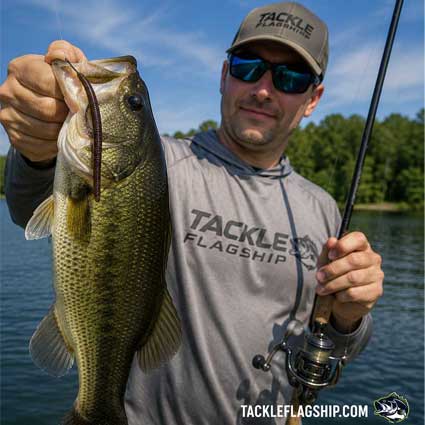
Circle Hook vs J Hook: Key Differences & How to Pick the Right One
Introduction
J hooks are versatile and beginner-friendly, while circle hooks excel in live bait, catfish, and catch-and-release fishing. Understanding the difference can help you choose the right hook, improve hookup rates, and avoid some of the most common mistakes anglers make.
Despite their popularity, many fishermen don't fully understand how differently these two hook styles work until they spend time using both on the water. At first glance, the differences appear minor. Both can be used with natural baits, both catch fish effectively, and both are available in a wide range of sizes. However, the way each hook sets, where it typically hooks the fish, and the situations where it performs best are surprisingly different.
If you've already read our Fishing Hook Types Explained for Beginners guide, you'll know that J hooks and circle hooks are two of the most important hook styles every angler should understand. They're also the two hook types most commonly compared by beginners trying to build their first tackle box.
The question isn't which hook catches fish. Both do that extremely well.
The real question is when each hook performs best and how to choose the right one for the way you fish.
Quick Answer
If you're looking for a simple answer before diving into the details, here's the short version.
J hooks are the most versatile fishing hooks available and are usually the best choice for beginners. They work well with natural baits, artificial lures, and a wide variety of fishing techniques.
Circle hooks are designed differently. Instead of relying on a traditional hookset, they rotate into the corner of a fish's mouth under steady pressure. Because of this, they are especially effective for live bait fishing, catfish fishing, saltwater bait fishing, and catch-and-release situations.
In short: choose J hooks for versatility and active fishing; choose circle hooks for bait fishing, catfish, rod holder fishing, and safer releases.
Quick Decision Table
| If You Want... | Best Choice |
|---|---|
| General Fishing | J Hook |
| Artificial Lures | J Hook |
| Freshwater Fishing | J Hook |
| Live Bait Fishing | Circle Hook |
| Catfish Fishing | Circle Hook |
| Saltwater Bait Fishing | Circle Hook |
| Catch-and-Release Fishing | Circle Hook |
| Rod Holder Fishing | Circle Hook |
| Beginner Simplicity | J Hook |
| Maximum Versatility | J Hook |
Visual Hook Comparison
Use the visual comparison below to quickly see how the two hook styles differ before diving into the detailed breakdown.

Visual Differences at a Glance
| Feature | J Hook | Circle Hook |
|---|---|---|
| Hook Shape | Traditional J Shape | Point Curves Toward Shank |
| Hook Point | Faces Outward | Faces Inward |
| Hookset Method | Manual Hookset | Steady Pressure |
| Typical Hook Placement | Various Locations | Corner of Mouth |
| Best Use | General Fishing | Live Bait & Catch-and-Release Fishing |
Even without understanding how each hook functions, the visual difference immediately reveals why they behave differently in the water.
A J hook is designed for fast penetration when an angler sets the hook. A circle hook is designed to rotate and position itself before penetrating. That difference in design is responsible for nearly every advantage and disadvantage discussed throughout the rest of this guide.
Key Takeaways
- J hooks are the most versatile fishing hooks and work well in almost every fishing situation.
- Circle hooks are designed to reduce deep-hooking and often hook fish in the corner of the mouth.
- J hooks require a traditional hookset from the angler.
- Circle hooks work best when pressure is applied steadily rather than aggressively.
- Circle hooks are often preferred for catfish, live bait fishing, saltwater bait fishing, and catch-and-release fishing.
- Most beginners should start with J hooks and add circle hooks as they gain experience.
What Is a J Hook?
When most people picture a fishing hook, they're imagining a J hook.
The design has remained popular for generations because it is simple, effective, and adaptable to an enormous range of fishing techniques. From panfish and trout to bass, catfish, pike, and even offshore species, J hooks have probably caught more fish worldwide than any other hook style.
The defining characteristic is the outward-facing hook point. When a fish bites and the angler sets the hook, the point penetrates quickly, creating a secure connection.
This direct relationship between bite detection and hookset is one reason beginners often find J hooks easier to understand. The process feels intuitive. You detect the bite, lift or sweep the rod, and drive the hook into the fish's mouth.
Because they work with worms, minnows, dough baits, cut bait, soft plastics, and countless other presentations, J hooks remain the default choice for many anglers when no specialized hook is required.
What Is a Circle Hook?
A circle hook may look unusual if you've spent most of your fishing life using traditional J hooks.
Instead of extending outward, the hook point curves inward toward the shank, creating a rounded shape that appears almost closed. While that design may seem strange at first, it serves a very specific purpose.
Circle hooks are not designed to be driven into a fish's mouth through a powerful hookset. Instead, they are designed to move into position naturally as tension increases on the line.
As a fish swims away with the bait, the hook begins sliding outward. As pressure builds, the curved shape causes the hook to rotate until the point catches near the corner of the mouth. Only then does the hook penetrate.
Because of this unique action, circle hooks have become extremely popular among catfish anglers, surf anglers, offshore anglers, and conservation-minded fishermen who prioritize healthy releases.
Many anglers who struggle with circle hooks are not using the hook incorrectly because of the hook itself. They're struggling because they're fishing it like a J hook.
The instinct to react with a sharp hookset is often the exact thing that prevents a circle hook from working properly.
How a J Hook Works
One of the reasons J hooks have remained the standard fishing hook for so long is that their operation is straightforward and easy to understand.
When a fish takes the bait, the angler detects the strike and responds with a traditional hookset. The motion of lifting or sweeping the rod drives the exposed hook point into the fish's mouth, creating a secure connection. From that moment on, maintaining pressure becomes the priority.
Because the hook point faces outward, penetration happens quickly. This immediate response is one of the biggest reasons J hooks perform so well with artificial lures. When a bass inhales a soft plastic worm or strikes a jig, the angler can react instantly and drive the hook home before the fish has a chance to spit the lure out.
The effectiveness of a J hook is closely tied to angler involvement. Good timing, solid bite detection, and an appropriate hookset all contribute to successful hookups. While that may sound like a disadvantage, many anglers actually prefer this level of control because it allows them to react directly to what the fish is doing.
How a J Hook Sets
- A fish takes the bait or lure.
- The angler detects the bite.
- The angler performs a traditional hookset.
- The hook point penetrates the fish's mouth.
- Pressure is maintained throughout the fight.

For active fishing techniques where the angler is constantly holding the rod and monitoring bites, few hook styles are as versatile as a traditional J hook.
How a Circle Hook Works
Circle hooks are designed around a completely different hooking process.
Rather than penetrating immediately when a fish takes the bait, a circle hook is intended to move into position before it sets. As the fish swims away and tension builds in the line, the hook gradually slides toward the edge of the mouth. Once it reaches the corner, the curved design causes the hook to rotate, allowing the point to catch and penetrate.
This is why experienced circle hook anglers often say, "Don't set the hook."
To someone accustomed to J hooks, that advice sounds wrong. Every instinct tells you to snap the rod upward when the bite comes. However, aggressively setting a circle hook often pulls it away before it has a chance to rotate properly.
When used correctly, the process feels surprisingly simple. The angler allows pressure to build, begins reeling, and lets the hook perform the work it was designed to do.
This hooking action is one reason circle hooks are so popular for catfish, surf fishing, offshore bait fishing, and other situations where fish may have several seconds to move away with the bait before the angler reacts.
How a Circle Hook Sets
- A fish takes the bait.
- The fish turns or moves away.
- Tension gradually increases.
- The hook slides toward the corner of the mouth.
- The hook rotates into position.
- The point penetrates and secures the fish.

The result is often a clean corner-of-the-mouth hookup, which makes hook removal easier and helps reduce deep-hooking.
Circle Hook vs J Hook Comparison Table
Although both hook styles catch fish effectively, they excel in different situations. Understanding those differences is often more important than deciding which hook is "better."
| Feature | J Hook | Circle Hook |
|---|---|---|
| Hook Shape | Traditional J Shape | Inward-Curved Point |
| Hookset | Manual Hookset Required | Sets Through Steady Pressure |
| Beginner Friendly | Excellent | Moderate |
| Artificial Lures | Excellent | Poor |
| Live Bait | Good | Excellent |
| Catfish Fishing | Good | Excellent |
| Saltwater Bait Fishing | Good | Excellent |
| Catch-and-Release Fishing | Good | Excellent |
| Fish Safety | Moderate | High |
| Deep-Hooking Risk | Higher | Lower |
| Rod Holder Fishing | Fair | Excellent |
| Versatility | Excellent | Moderate |
The most important takeaway from this comparison is that neither hook is universally superior.
A J hook is designed to maximize versatility and angler control. A circle hook is designed to maximize natural hookups and reduce deep-hooking. The best choice depends entirely on how you fish and what species you're targeting.

J Hook Advantages
The biggest strength of a J hook is its versatility.
Few pieces of fishing tackle can adapt to as many situations. A single pack of appropriately sized J hooks can be used for panfish, trout, bass, walleye, catfish, carp, and many saltwater species. Whether you're fishing worms beneath a bobber, drifting live bait, or working soft plastics along the bottom, there's a good chance a J hook can handle the job.
Many anglers also appreciate the level of control a J hook provides. Because the hookset is performed by the angler, there's an immediate connection between detecting a strike and securing the fish. This becomes particularly valuable when fishing artificial lures, where quick reactions often make the difference between landing a fish and missing an opportunity.
Another reason J hooks remain so popular is their accessibility. Most beginner fishing setups, instructional videos, and entry-level tackle kits are built around J hooks. As a result, new anglers can learn fundamental fishing skills without having to adjust their hook-setting technique for a specialized hook design.
For anglers who want one hook style capable of handling the widest range of situations, J hooks remain difficult to beat.
J Hook Disadvantages
Most of the limitations associated with J hooks appear when natural bait is involved.
When fishing worms, minnows, cut bait, or other natural presentations, fish sometimes have enough time to swallow the bait before the angler reacts. In those situations, a J hook is more likely to end up deeper inside the mouth than a circle hook. While this doesn't happen every time, it occurs often enough that many conservation-minded anglers eventually begin exploring circle hooks as an alternative.
J hooks also place greater responsibility on the angler. Success often depends on recognizing bites quickly and applying the correct hookset at the right moment. Beginners frequently struggle with timing, especially when targeting species that bite softly or behave unpredictably.
Passive fishing can create another challenge. If rods are sitting in holders and fish are allowed to move away with the bait before the angler reacts, hookup rates may suffer compared to circle hooks, which are specifically designed to work under steady pressure.
These limitations don't make J hooks a poor choice. In fact, they're still the preferred option for countless fishing techniques. They simply require more active participation from the angler than circle hooks do.
Circle Hook Advantages
The growing popularity of circle hooks is largely tied to one benefit: improved hook placement.
Because the hook is designed to rotate toward the corner of the fish's mouth before penetrating, deep-hooking becomes less common than it is with many traditional hook styles. This makes hook removal easier and can improve survival rates for fish that are released.
For anglers who practice catch-and-release fishing regularly, this advantage is significant. A clean corner-of-the-mouth hookup is often easier on the fish and allows for faster releases.
Circle hooks also perform exceptionally well when fish are given time to move away with the bait. Catfish anglers, surf anglers, and offshore fishermen often rely on rod holders, making it impractical to react instantly to every bite. In these situations, circle hooks can create surprisingly consistent hookups simply by allowing tension to build naturally.
Their effectiveness has become so widely recognized that some fisheries now require circle hooks when fishing natural bait for certain species. The goal is straightforward: reduce deep-hooking, improve fish survival, and encourage more sustainable fishing practices.
Circle Hook Disadvantages
Despite their advantages, circle hooks are not ideal for every situation.
The biggest challenge for most anglers is changing habits. Anyone who has spent years setting J hooks instinctively wants to react with a sharp hookset the moment a fish bites. Unfortunately, that reaction often prevents a circle hook from working correctly. Learning to trust steady pressure instead of a traditional hookset can take time.
Circle hooks are also less suited to many artificial lure techniques. Presentations that depend on immediate hook penetration, fast reactions, or aggressive hooksets generally perform better with traditional hook styles. This is why bass anglers fishing soft plastics, jigs, spinnerbaits, and crankbaits continue to rely heavily on J-style hooks and treble hooks.
Another limitation is specialization. While circle hooks excel in certain situations, they are not the universal solution some anglers assume them to be. Their strengths become most apparent when fishing natural bait, targeting species that tend to swallow bait, or prioritizing fish-friendly hook placement.
Understanding those strengths and limitations is the key to deciding when a circle hook is truly the better tool for the job.
Best Situations for J Hooks
While both hook styles can catch fish effectively, there are situations where a traditional J hook is clearly the better tool.
Artificial lure fishing is perhaps the best example. Whether you're working a soft plastic worm for bass, twitching a jerkbait for trout, or hopping a jig along the bottom for walleye, successful hooksets often depend on immediate penetration. When a fish strikes, the angler needs to react quickly and drive the hook home before the fish rejects the lure.
This is where J hooks excel.
Because the hook point is exposed and designed for direct penetration, anglers have complete control over the hookset. Many experienced bass anglers prefer this connection because it allows them to respond instantly to subtle bites and maintain confidence throughout the fight.
J hooks are also a natural fit for active fishing styles. If you're holding the rod, watching a float, feeling bottom contact through a lure, or constantly monitoring your line, a traditional hookset becomes an advantage rather than a disadvantage.
For this reason, J hooks remain the most common choice for bass, trout, crappie, bluegill, walleye, and many other freshwater species.

Best Situations for Circle Hooks
Circle hooks tend to perform best when fish are allowed to fully take the bait before pressure is applied.
Catfish fishing is one of the most obvious examples. Many catfish anglers fish multiple rods from holders and allow fish to move away naturally with the bait. Rather than rushing to set the hook, they simply allow the rod to load under pressure before beginning to reel. In this situation, a circle hook often hooks the fish exactly as intended.
The same principle applies in many saltwater fisheries. Species such as redfish, snapper, drum, and numerous offshore species frequently take natural bait and move away before the angler reacts. Circle hooks are designed specifically for this style of fishing and often produce excellent hookup rates while reducing deep-hooking.
Catch-and-release anglers also appreciate circle hooks because of their tendency to hook fish near the corner of the mouth. A cleaner hook placement usually means easier hook removal and less stress on the fish during release.
It's worth noting that some saltwater fisheries now require circle hooks when fishing natural bait for certain species. These regulations exist largely because circle hooks have been shown to reduce deep-hooking and improve fish survival after release.

Which Hook Is Better for Different Fish?
Fishing style is usually more important than species alone, but certain fish are commonly associated with one hook style over the other.
| Species | Most Common Choice |
|---|---|
| Bluegill | J Hook |
| Crappie | J Hook |
| Trout | J Hook |
| Bass | J Hook |
| Walleye | J Hook |
| Pike | J Hook |
| Catfish | Circle Hook |
| Redfish | Circle Hook |
| Snapper | Circle Hook |
| Drum | Circle Hook |
| Saltwater Bait Species | Circle Hook |
These recommendations shouldn't be viewed as strict rules.
Plenty of anglers catch catfish on J hooks, and some anglers successfully use circle hooks for bass when fishing live bait. However, if you're trying to decide where to start, the table above reflects the approach most experienced anglers follow.
Note: Hook size should generally match the size of your bait before the size of the fish. Whether you choose a J hook or a circle hook, proper bait presentation usually matters more than using the largest hook possible. For a complete breakdown, see the Hook Size section in our Fishing Hook Types Explained for Beginners guide.
Circle Hook vs J Hook for Beginners
If you're new to fishing, it's easy to assume that one hook must be objectively better than the other.
In reality, both hooks are excellent when used in the situations they were designed for.
For most beginners, however, J hooks are usually the easiest place to start.
The reason is simple. New anglers are already learning how to cast, detect bites, fight fish, land fish, and manage their tackle. J hooks fit naturally into that learning process because the relationship between bite detection and hookset is easy to understand. When a fish bites, you react, set the hook, and fight the fish.
If most of your fishing involves artificial lures, active presentations, or holding the rod in your hands while waiting for bites, a J hook will usually feel more intuitive.
Circle hooks become more valuable as your fishing expands into live bait fishing, catfish fishing, and saltwater bait fishing.
In those situations, fish often have time to move away with the bait before pressure is applied. Rather than requiring a traditional hookset, circle hooks use the fish's movement to create the hookup. Once anglers understand this process, many become strong supporters of circle hooks for bait fishing applications.
The best approach for most beginners is not choosing one hook style forever. Learn the fundamentals with J hooks, then add circle hooks when your fishing situations call for them.
Common Beginner Mistakes
Setting Circle Hooks Too Hard
One of the biggest mistakes anglers make is treating a circle hook exactly like a J hook.
With a J hook, an aggressive hookset is often exactly what you want. With a circle hook, that same reaction can pull the hook away before it has time to rotate into position. Many anglers who claim circle hooks don't work are unknowingly preventing the hook from functioning as designed.
Instead of snapping the rod upward, allow pressure to build and begin reeling steadily. In many situations, the hook will set itself more effectively than any aggressive hookset.
Choosing Hooks That Are Too Large
Bigger hooks are not always better.
Many beginners assume larger hooks catch larger fish, but hook size should usually match the bait presentation first. An oversized hook can make bait appear unnatural, reduce bites, and sometimes lower hookup rates.
A properly sized hook often outperforms a larger hook, even when targeting bigger fish.
Using the Wrong Hook for the Situation
Some anglers spend so much time searching for the "best" hook that they overlook the importance of matching the hook to the fishing style.
A perfectly chosen circle hook can struggle when used with certain artificial lures. Likewise, a J hook may not be the best option when fishing live bait for catfish with rods sitting in holders.
Successful anglers think of hooks as tools. Different tools solve different problems, and understanding when to use each hook is often more important than the hook itself.
FAQ
Still unsure which hook to choose?
Below are answers to some of the most common questions anglers ask about circle hooks and J hooks.
Do Circle Hooks Catch More Fish?
Not necessarily.
Circle hooks often improve hookup consistency in live bait situations, especially when fish have time to move away with the bait. However, J hooks frequently outperform circle hooks when fishing artificial lures or techniques that require immediate hook penetration.
Why Are Circle Hooks So Popular for Catfish Fishing?
Catfish often move away with bait before the angler reacts. Circle hooks are specifically designed for this behavior and can create reliable hookups without requiring a hard hookset.
For a deeper breakdown of catfish-specific setups, see our Best Hooks for Catfish guide.
Can I Use Circle Hooks with Artificial Lures?
You can, but they are generally not the preferred choice.
Most artificial lure techniques rely on fast hooksets and immediate penetration, which typically favors J hooks or treble hooks.
Do Circle Hooks Reduce Fish Mortality?
In many situations, yes.
Because circle hooks are more likely to hook fish near the corner of the mouth, deep-hooking occurs less frequently. This usually makes hook removal easier and reduces injury to released fish.
What Size Circle Hook Should I Use?
The correct size depends on the species and bait being used.
Many catfish and saltwater anglers commonly use sizes ranging from 2/0 to 6/0, while smaller species often require much smaller hooks.
For a complete breakdown of hook sizing systems, see our Fishing Hook Sizes Explained guide.
Are Circle Hooks Required by Law Anywhere?
Yes.
Some saltwater fisheries require circle hooks when fishing natural bait for specific species. Regulations vary by location, so always check local fishing rules before heading out on the water.
Can You Use Circle Hooks for Trout and Panfish?
Yes.
Small circle hooks can work well when fishing live bait for trout, bluegill, and other panfish species. However, J hooks remain the more common choice for everyday float fishing, worm fishing, and other active presentations where anglers prefer a traditional hookset.
Do Circle Hooks Need Different Rigging Than J Hooks?
Not usually.
In most situations, the rig itself remains exactly the same. The biggest difference is how the hook is fished. With circle hooks, anglers should avoid aggressive hooksets and instead allow steady pressure to rotate the hook into position naturally.
Final Thoughts
If versatility is your priority, J hooks remain the best all-around option for most anglers. They adapt to an enormous range of fishing techniques, work exceptionally well with artificial lures, and provide the direct control many fishermen prefer.
However, if you regularly fish with live bait, target catfish, spend time surf fishing, or practice catch-and-release fishing, circle hooks offer significant advantages in both fish safety and hook placement. Their ability to reduce deep-hooking has made them one of the most important hook innovations in modern angling.
If you're still building your tackle box, start with a few quality J hooks and add circle hooks as your fishing expands into live bait or catfish fishing. Understanding both hook styles will prepare you for a much wider range of fishing situations and help you make better decisions every time you tie on a hook.
Related Articles
-
Fishing Hook Types Explained for Beginners
Learn the most common fishing hook styles and when to use them. -
Best Hook for Live Bait Fishing
Discover which hook styles work best with worms, minnows, and natural baits. -
EWG Hook vs Offset Hook
Compare two of the most popular soft-plastic hook designs. -
Best Hooks for Catfish
Learn which hooks perform best for channel cats, blue cats, and flatheads.